Making Chocolate at a Local Chocolate Factory
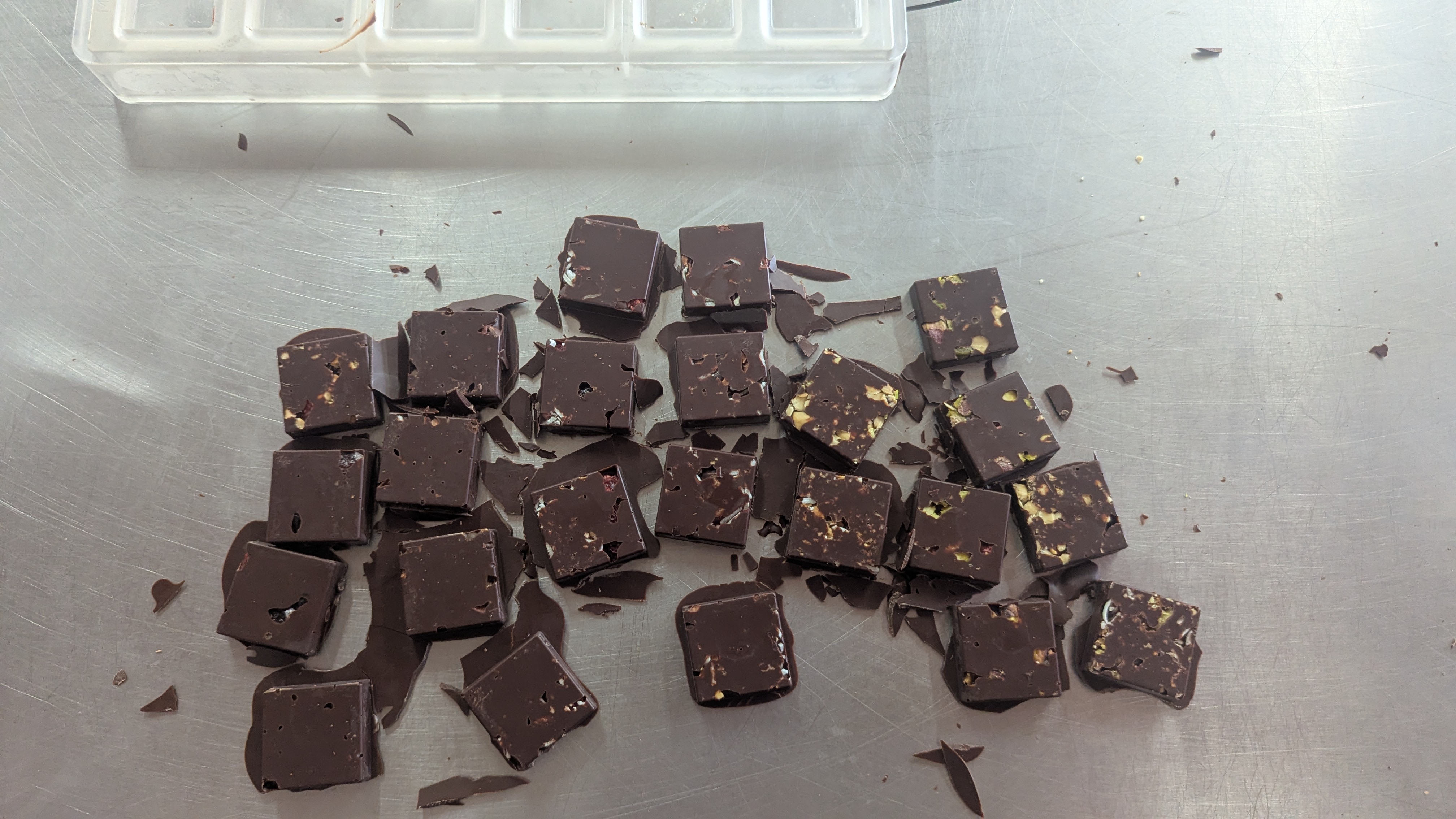
I visited a local chocolate factory for a chocolate-making workshop.
The factory handled the difficult bean-to-chocolate process ahead of time. By the time the workshop began, we had finished chocolate ready to melt, pour, and turn into our own bars and treats.
That still gave a useful view into how much work happens before chocolate reaches the mould, like peeling the actual cocoa beans in the cacao pod.
From Cocoa Bean to Chocolate
Chocolate begins with cocoa beans, but they do not arrive looking or tasting much like a chocolate bar.
The factory sourced cocoa beans, then processed them through the early stages of chocolate making, starting with roasting and peeling the cocoa beans. We also got to grind the beans into cacao nibs.
Roasting develops the familiar chocolate flavour and makes the shells easier to remove. The beans are then cracked, and the shells are separated from the interior pieces, called cocoa nibs.
The nibs contain cocoa solids and cocoa butter. Grinding them turns them into a thick cocoa paste, often called chocolate liquor. Sugar, additional cocoa butter, and other ingredients can be added depending on the style of chocolate being made.
After grinding, the chocolate needs to become smooth.
Refining reduces the size of the cocoa and sugar particles so the chocolate no longer feels grainy. Conching then mixes, aerates, and warms the chocolate over time, helping develop its flavour and texture by distributing cocoa butter and removing some volatile acids.
Before it can be moulded into bars, the chocolate is tempered.
Tempering is a controlled heating-and-cooling process that encourages stable cocoa-butter crystals to form. Those crystals are responsible for the glossy surface, firm texture, and clean snap expected from finished chocolate. The guide demonstrated the tempering process, and we used that to fill the mold with other ingredients.
For the workshop, the factory had already completed those production steps.
We worked with finished chocolate and focused on the more immediately rewarding part: assembling our own creations. I chose a mould, added ingredients such as nuts, and poured chocolate over them.
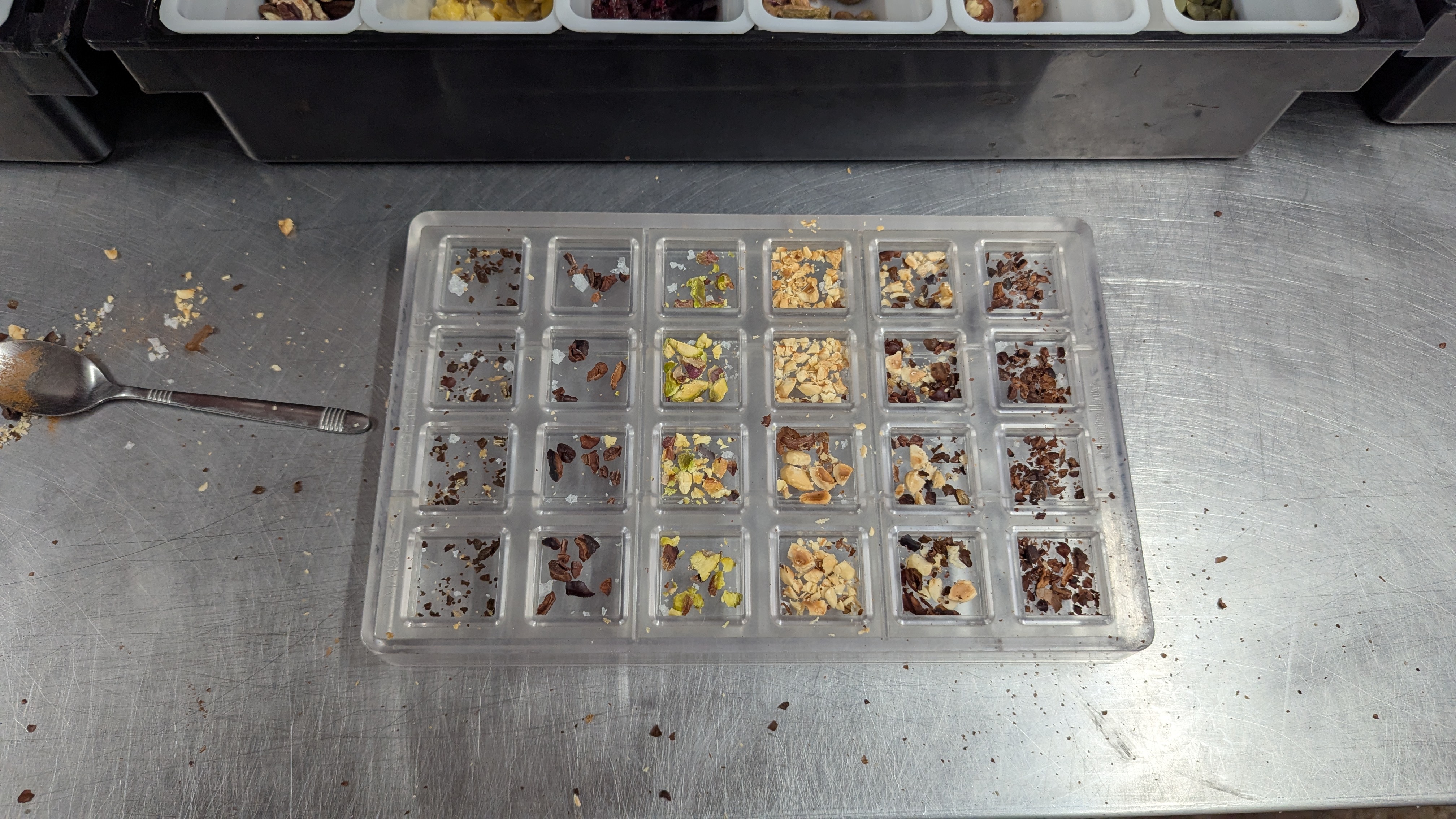
The moulds made it easy to turn a simple mixture of chocolate and inclusions into something that looked like a finished product rather than a random pile of ingredients.