NH38 Automatic Open Heart with Pepsi Bezel
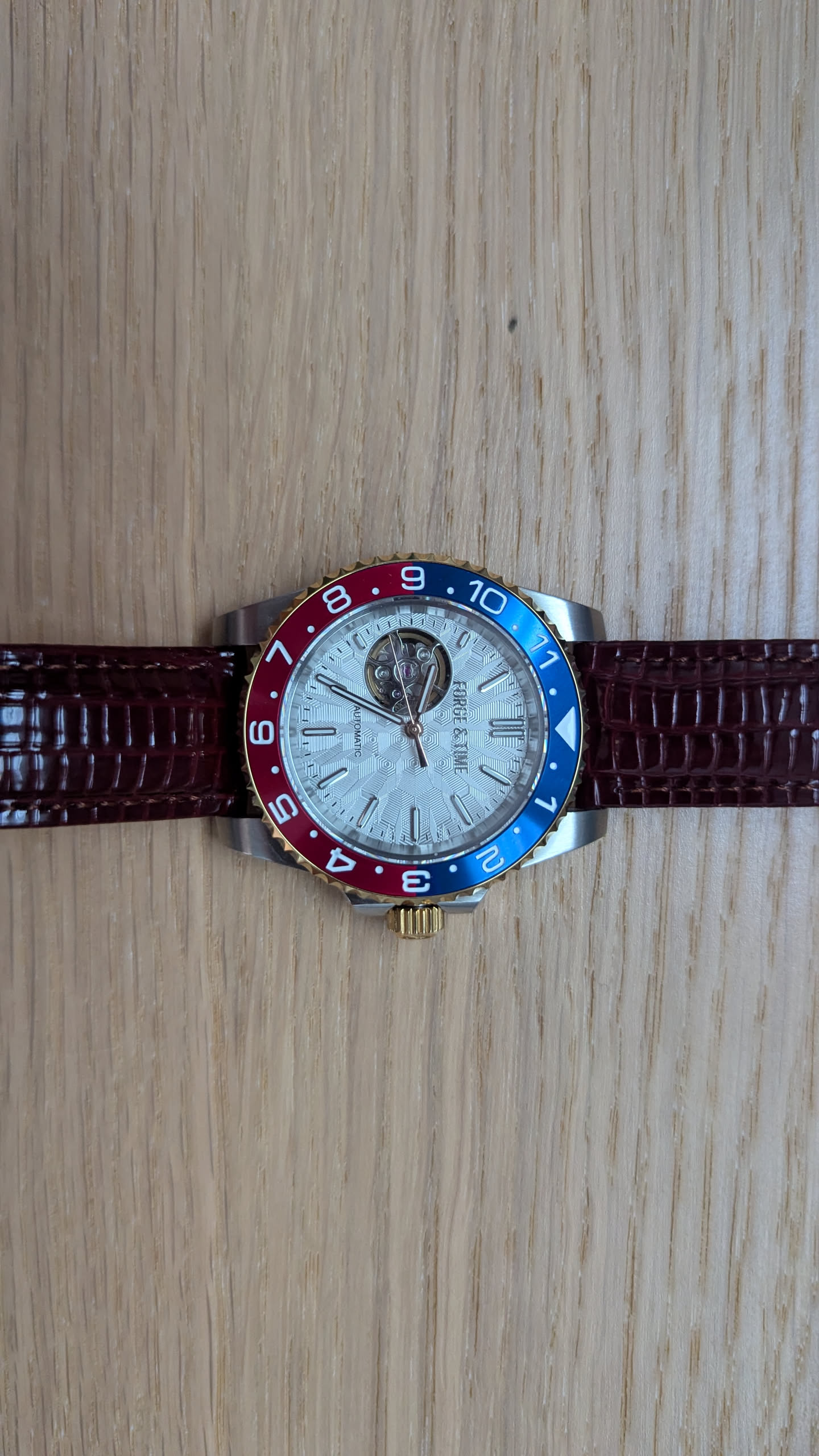
This was my first custom watch and it was a guided build.
I did not arrive with a fixed design or enough experience to know which parts would work together. Instead, I visited a watch-building workshop where the guide supplied the parts, explained the available options, and helped make sure that each choice was compatible with the rest of the watch.
It was a mix-and-match experience, where he guide had an inventory of parts, and he knew which ones were compatible with which movement
Choosing the Parts
The workshop had the feeling of a small watchmaking lab.
Each workstation had the tools needed for the build: movement holders, hand presses, tweezers, screwdrivers, loupe magnifiers, caseback tools, and other small equipment that makes working with watch components possible.
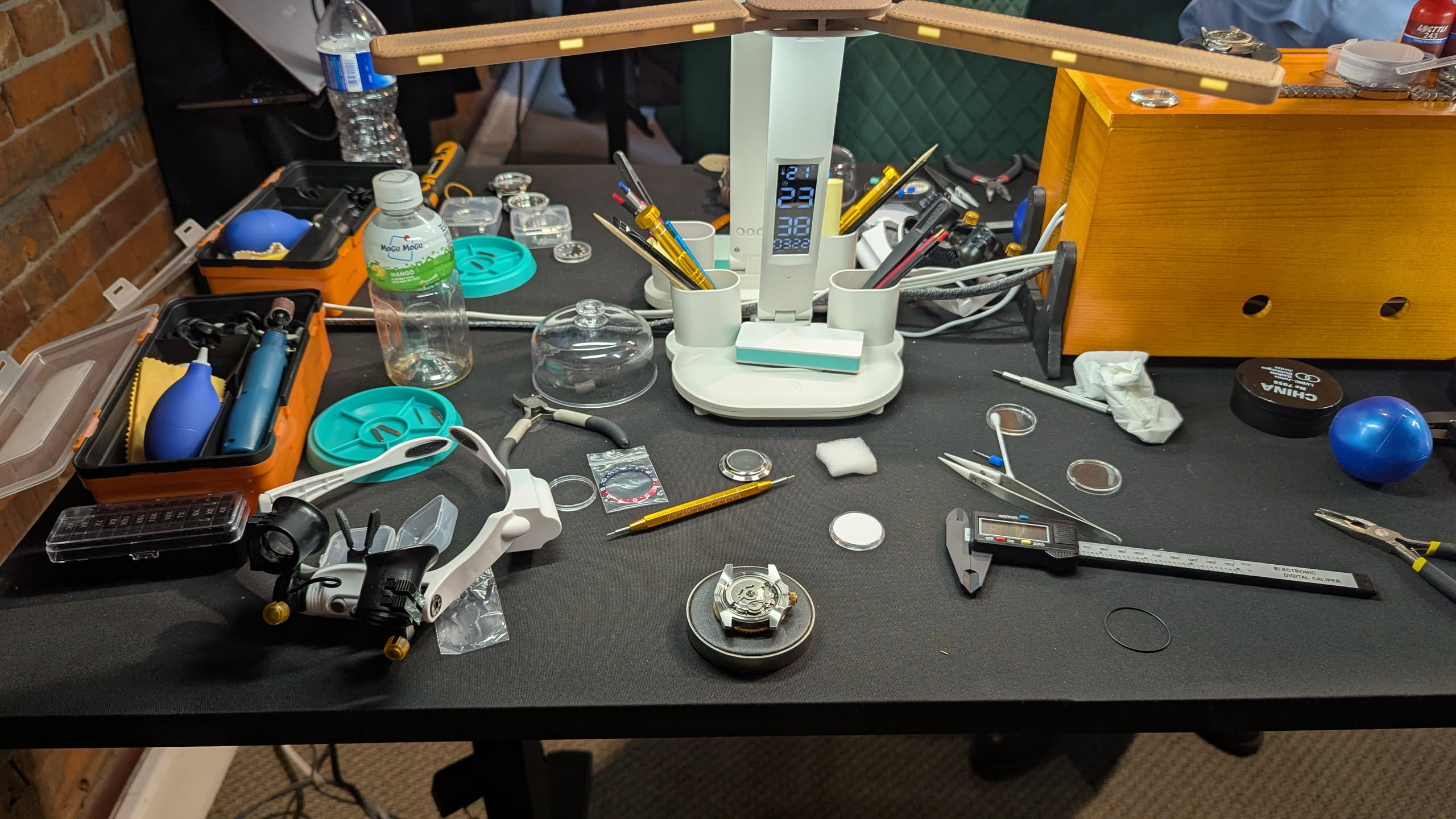
The guide laid out the choices and explained the dependencies between them. A dial needed to match the movement. The hands had to fit the movement’s pinions. The case needed to accept the movement, dial, crown, stem, crystal, and bezel arrangement.
That was the most useful part of the experience. I was not only choosing parts that looked good; I was learning why some combinations worked and others did not.
The Movement
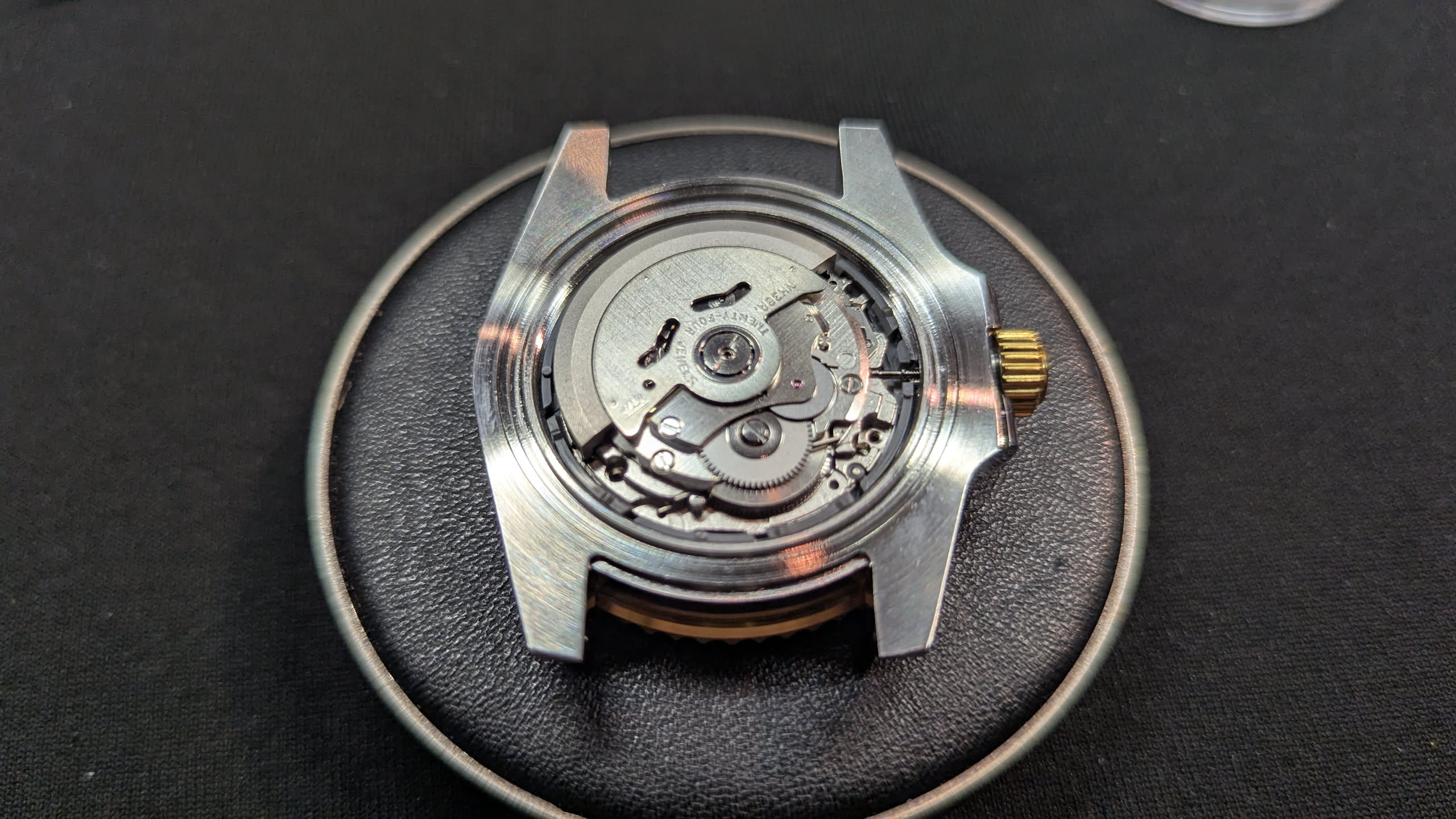
The final watch used an NH38 open-heart automatic movement.
The NH38 is a three-hand, no-date mechanical movement with an opening on the dial side that can reveal the balance wheel. It has automatic winding, hand-winding, hacking seconds, a 41-hour power reserve, and no unused date setting position.
The Final Design
I ended up with a watch that mixed several design ideas:
- An NH38 open-heart movement
- A textured waffle dial
- A Pepsi GMT-style bezel in red and blue
- A case with a gold-toned bezel rim
- A gold screw-down crown
- Gold-bordered hands with white centres
- A leather strap
The result was more colourful and detailed than a single-purpose tool watch. The waffle dial added texture, the open-heart cutout showed the movement, and the red-and-blue bezel gave the watch its strongest visual feature. It looks more expensive than it actually is
A Useful Introduction
The finished watch mattered, but the learning experience was more valuable.
Before the workshop, custom watch building seemed like a collection of small, specialised tasks: selecting parts, fitting a dial, installing hands, cutting a stem, fitting a crown, casing the movement, and closing the case without damaging anything.
That gave me enough of a foundation to start building later watches on my own.
It began as a guided afternoon in a well-equipped workshop and ended with a watch that I had selected, assembled, and understood well enough to use as a starting point for everything that came next.